
High-Hazard Risk Tools
The Right Tools Make High-Energy Hazards Visible Before Something Goes Wrong.
Two proven frameworks — Bow Tie Analysis and the Energy Wheel — help organizations identify critical controls, evaluate exposure, and manage high-energy hazards before they result in serious injury.
Why Most Organizations Miss the Hazards That Matter Most
Most safety programs focus on the hazards that are easy to see and easy to document. High-energy hazards — the ones with the potential to kill — often get managed by procedure alone. These tools help you see the full picture: what the energy sources are, what controls are in place, whether those controls are actually working, and what happens if they fail.

The Tools
Two frameworks, built for high-hazard field environments.
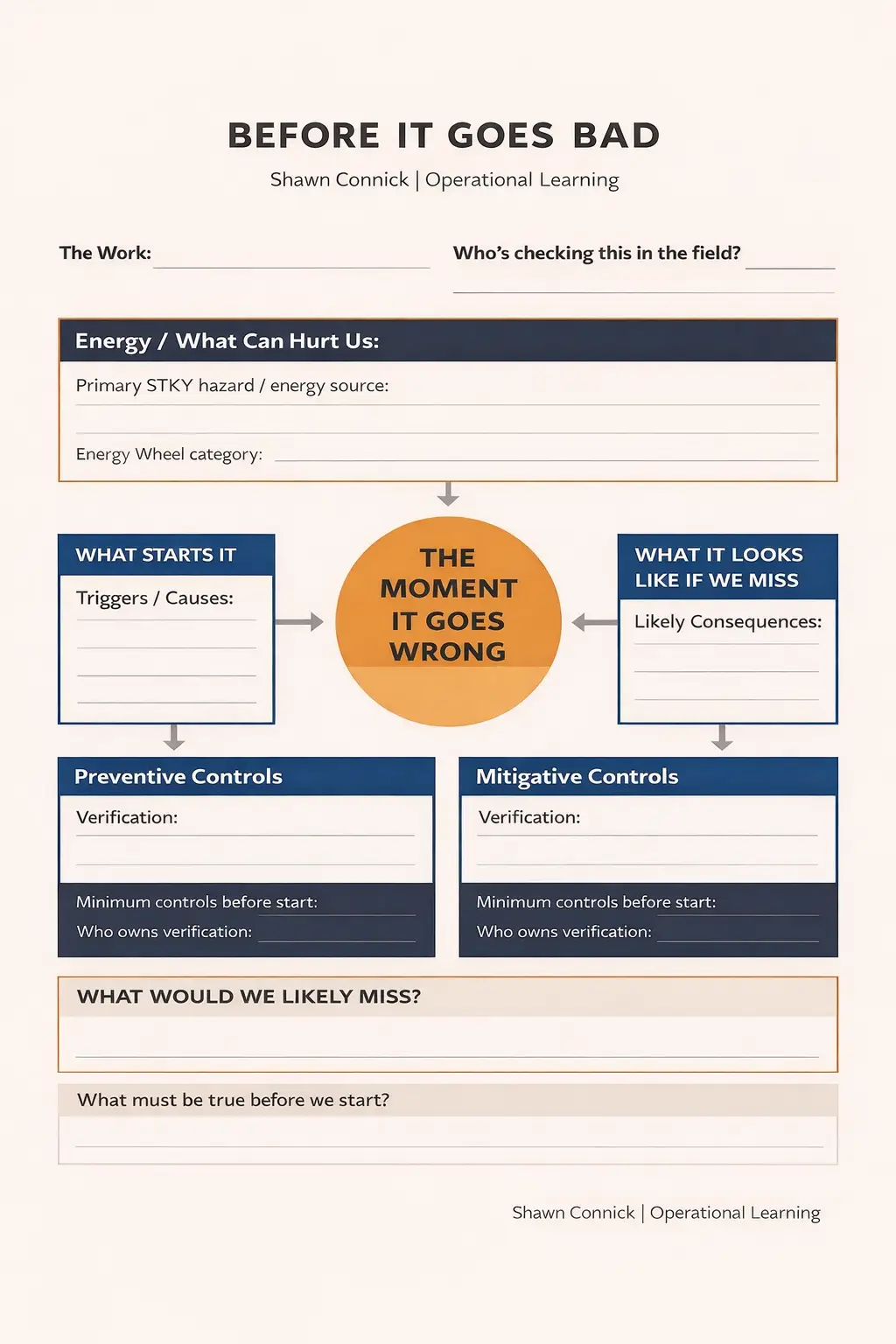
Bow Tie Analysis
A visual risk management tool that maps the relationship between a hazard, its causes, its consequences, and the controls that prevent or mitigate each. Bow Tie Analysis makes critical controls visible — and makes it clear what happens when they fail. Particularly effective for high-energy work where the consequences of control failure are catastrophic.
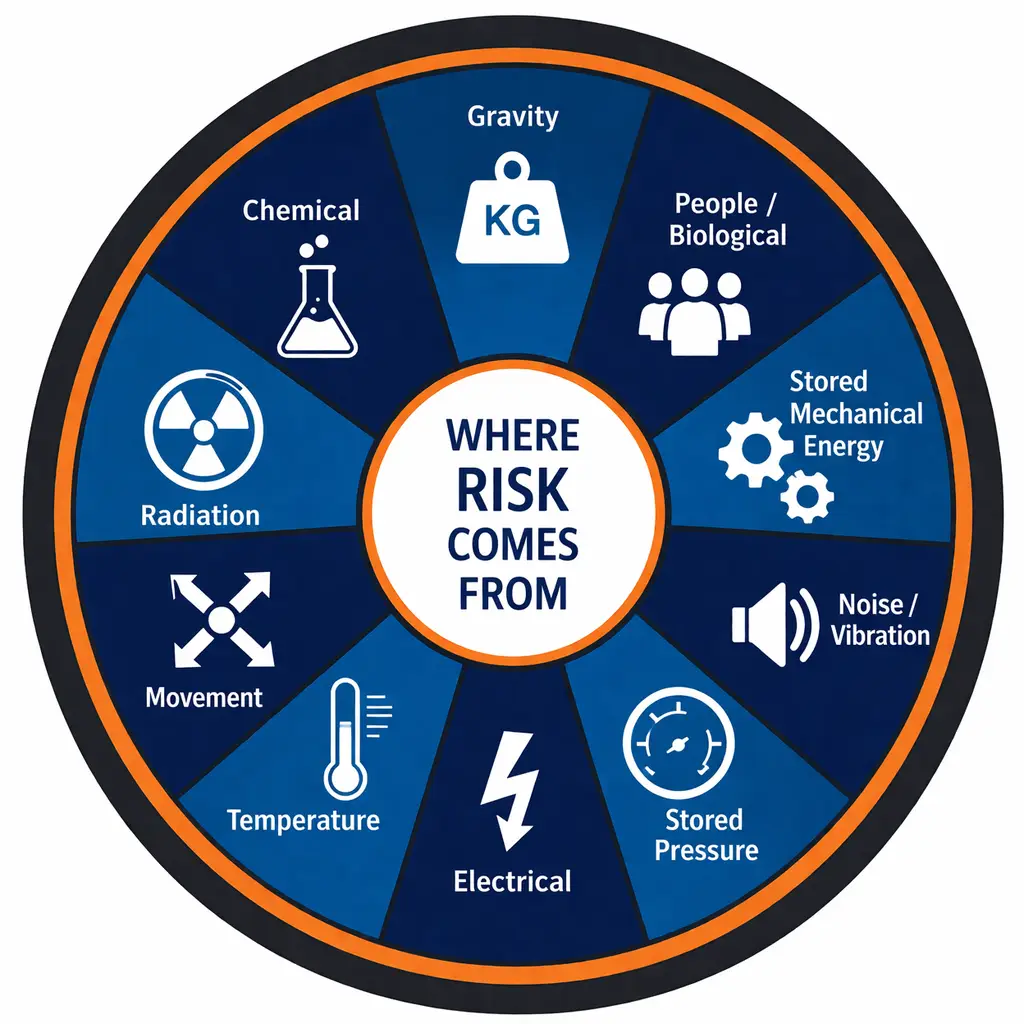
Energy Wheel
Based on William Haddon’s 1973 energy damage model, the Energy Wheel is a practical field tool for identifying energy sources, transfer mechanisms, and control points in high-hazard work. Informed by research from the Construction Safety Research Alliance (CSRA) at the University of Colorado, it helps teams move beyond generic hazard lists to a systematic, science-based understanding of how energy causes harm — and where intervention is most effective.
FAQs
Common questions about Bow Tie Analysis and the Energy Wheel.
A JHA identifies hazards and lists precautions. A Bow Tie maps the full causal chain, from hazard to top event to consequences and identifies specific barriers that prevent or mitigate harm. It’s a more complete picture of how an event actually unfolds.
The people who actually do the work. Bow Tie Analysis done only by safety managers produces a document. Done with the workforce, it produces understanding and ownership.
No. It’s based on William Haddon’s 1973 energy damage concepts. The trademark has been abandoned and the tool is free to use. Note that specific research publications, diagrams, and written materials from organizations like the Construction Safety Research Alliance (CSRA) are their own protected work — we reference the underlying concepts, not proprietary content. We use the Energy Wheel because it works, not because it’s ours.
Typically a half day to a full day depending on the hazard and group size. The goal isn’t to create a perfect diagram — it’s to surface what the team knows about the controls and where the gaps are.
That’s not their primary purpose — and we’d caution against retrofitting them to investigation after the fact. These tools are most valuable before an event: evaluating whether existing controls are actually effective, identifying gaps in critical control management, and designing new controls for high-energy work. The goal is to understand and strengthen your defenses while you still can.