When was the last time you asked what happens to the form?
Sidney Dekker wrote about safety bureaucracy that drifts into feeding itself. Forms that exist because forms have always existed. Not because anyone asked whether it was making anything safer.
JHAs and pre-task plans are where that drift gets expensive.
These documents aren’t OSHA requirements. But once you create one, it becomes evidence. A generic form doesn’t protect you — it documents that you knew about a hazard and didn’t act on it. OSHA’s focus isn’t the paperwork. It’s whether hazards were actually identified and controlled in the field.
Here’s what we actually know. CSRA’s Energy Wheel research tells us that even at our best, we miss hazards. Not because workers aren’t paying attention. Because hazards are dynamic. Conditions change. The plan written yesterday can’t see what’s in front of your crew this morning.
The answer isn’t a better form. It’s a better conversation.
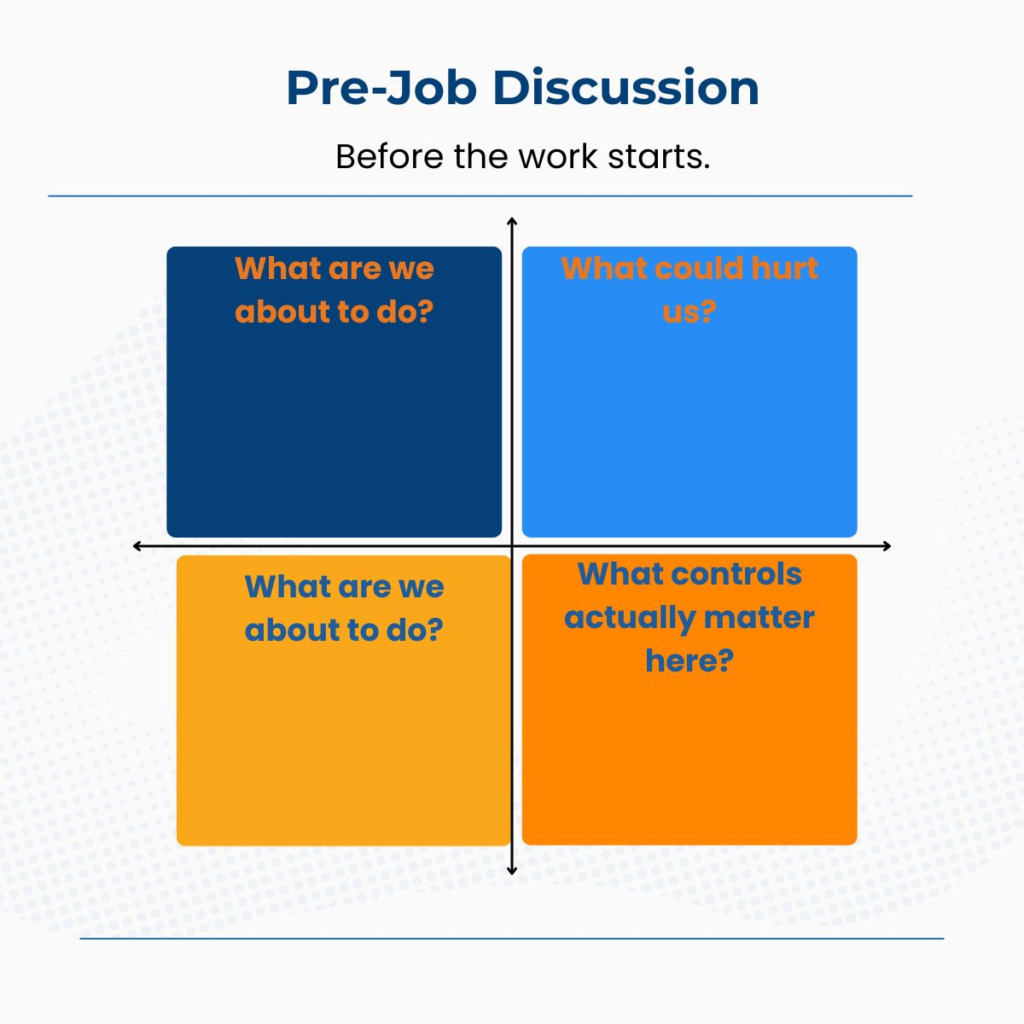
Four questions before the work starts:
What are we about to do?
What could hurt us?
What would make that more likely today?
What controls actually matter here?
People looking at the work, talking about the work, raising their concerns before something goes wrong. That’s what OSHA is actually after. That’s what keeps people safe.
The form can’t do that.
hashtag#OperationalLearning hashtag#ConstructionSafety hashtag#HOP